
Screenings
Early detection saves lives. St. Tammany Health System offers advanced lung and colon cancer screening services designed to identify cancer at its earliest, most treatable stages, providing expert care close to home on the Northshore.
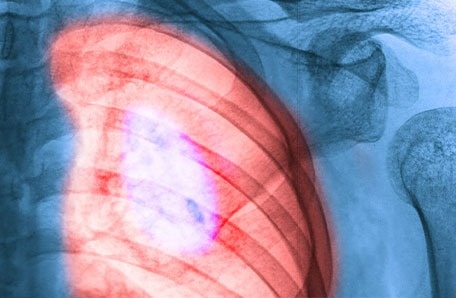
Early Detection Starts Here
Lung & Colon Cancer Screenings
Lung Cancer Screening
STHS’s low-dose CT scan program is designed to catch, treat cancer early.
Fact: Lung cancer is the number one cancer killer in the United States.
Also a fact: It doesn’t need to be.
That’s why St. Tammany Health System in 2015 launched its ACR-accredited low-dose CT scan screening program as part of our ongoing prevention and early detection efforts.
“It’s really pretty simple: Low-dose CT scans save lives,” said Megan Broussard, the low-dose CT program coordinator at St. Tammany Health System’s only-in-the-region Care Continuum Center of Excellence, as named by the GO2 Foundation for Lung Cancer. “If lung cancer is detected early, as a stage one disease, the five-year survival rate is between 68 and 92 percent. If it’s left until stage four, you go to a 10 percent five-year survival rate at best.”
Fortunately, Broussard said, low-dose CT scans are quick and painless.
“There are no needles, no dyes, no fasting,” she said. “You even keep your regular clothes on, and – for those concerned with small spaces – your head never even goes through the machine at any point during the procedure.”
The lowdown on low-dose CT lung scans
As program coordinator at STHS’s only-in-the-region Lung Screening Center of Excellence, Megan Broussard walks you through the process of receiving a low-dose CT scan – which are simple, quick, painless and effective – and discusses how they save lives.
A low-dose CT scan produces a 3D X-ray picture of a patient’s lungs. That image is taken using a small dose of radiation that is more than that used in a chest X-ray but much lower than in other types of CT scans.
During the procedure, which takes fewer than 15 seconds, a patient lays horizontally on a sliding platform. A technologist then positions the patient, sliding them feet-first through the ring-shaped CT scanner until their chest is in proper alignment with the equipment. The tech then briefly leaves the room, presses a button and, just like that, the procedure is complete.
And, really, that’s it.
The scans are then evaluated by St. Tammany Health System’s trained radiologists, who look for any abnormalities. Results are usually available within 24 to 48 hours.
In addition to being quick and easy, low-dose CT scans are also safe. In fact, St. Tammany Health System’s Paul D. Cordes Outpatient Pavilion in Covington, where its low-dose CT program is based, is the only facility in the New Orleans metro area designated a Care Continuum Center of Excellence by the GO2 Foundation for Lung Cancer, in recognition of STHS’s commitment to providing responsible, high-quality and safe screening practices.
Questions? Want to schedule a lung scan? Call 985-871-5864 (LUNG)
- Cancer is second-leading cause of death in the US behind heart disease. Lung cancer is one of the most common cancers and accounts for the largest number of cancer deaths among men (26%) and women (25%).
- Time is everything when it comes to lung cancer. If it is detected early, as a stage one disease, the five-year survival rate is between 68 and 92 percent. If it’s left until stage four, the five-year survival rate plummets to 10 percent.
- The American Cancer Society estimates 3,700 new cases of lung and bronchus cancer will be detected in Louisiana in 2020. They also estimate 2,330 Louisianans will die from lung cancer in 2020.
- According to the American Lung Association, the rate of new lung cancer cases in Louisiana is 67.9 and significantly higher than the national rate of 59.6. It ranks 38th among all states, placing it in the below-average tier.
- Tobacco use is the leading risk factor for lung cancer, although environmental exposures can increase the risk as well, so not everyone with lung cancer has a history of tobacco use.
- The smoking rate in Louisiana is 23.1% and significantly higher than the national rate of 16.4%. It ranks 49th among all states, placing it in the bottom tier.
- Louisiana ranks 41st among the 48 states with data on diagnosis at an early stage, placing it in the below-average tier.
Colon Screening
Do I need a colon cancer screening?
- Get moving! Being more active reduces your risk of colorectal cancer.
- Maintain a healthy weight.
- Follow a diet high in vegetables, fruits and whole grains.
- Lower your consumption of red meat and alcohol.
- Quit smoking.
- If you’re between 45 and 75 years old, talk to you doctor about scheduling a colon cancer screening.
- People with inflammatory bowel disease, a personal or family history of colorectal cancer or colorectal polyps, and certain genetic syndromes such as familial adenomatous polyposis or hereditary polyposis colorectal cancer should be screened earlier and more frequently.
As easy as 1-2-3
Colonoscopy
The current gold standard of colorectal screenings, a colonoscopy involves a direct visual inspection of the large intestine through use of a fiber-optic camera. It is the most sensitive and accurate test for colorectal cancer. During the procedure, a doctor can find and remove most polyps and some cancers.
FIT
FIT, which stands for fecal immunochemical test, uses antibodies to detect blood in a patient’s stool. It is an at-home test in which the patient collects a stool sample and sends it to a lab, which sends the results to the patient’s physician for analysis. In healthy patients, it is conducted once a year.
FIT-DNA test
Advertised under name brand Cologuard – featuring commercials with a talking box – this is an at-home test similar to a standard FIT test but also looks for the presence of altered DNA in the stool that could be a warning sign. In healthy patients, it is conducted once every three years.